 Custom Your Spin
Lucky Draw & Raffle – Best Practices
Events
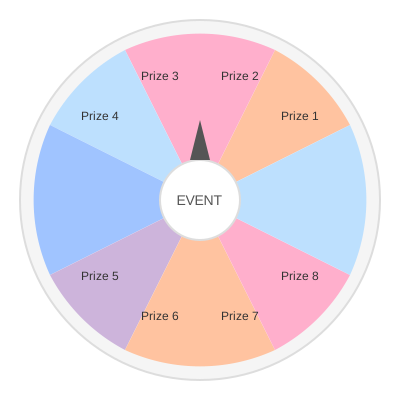
Transform your fundraisers, charity events, and promotional campaigns with a transparent, engaging lucky draw process that builds trust while creating memorable moments of anticipation. Traditional raffle drawings often happen behind closed doors or use opaque selection methods that can leave participants questioning the legitimacy of the results. By implementing a visible spinning wheel with clearly displayed ticket numbers or participant names, you create an irrefutable visual demonstration of fair selection that enhances credibility while turning the winner announcement into an exciting event highlight rather than a procedural afterthought.
Implementation follows a straightforward process that maintains both excitement and integrity: assign sequential ticket numbers to all participants, add these numbers to the wheel (either individually for smaller raffles or in batches for larger events), and conduct the drawing as a public spectacle with the wheel prominently displayed. Record the entire spinning process from start to finish, creating documentation that can be shared with participants or kept for verification purposes. When announcing winners, always have several alternate selections ready in case the primary winner is ineligible or unreachable, ensuring your event maintains momentum regardless of initial response.
The Psychology of Effective Raffle Experiences
Event psychology research reveals that the perceived fairness of prize drawings significantly impacts overall satisfaction with fundraisers and promotional events. When participants can physically see the selection process occurring through a spinning wheel, their trust in the organization increases dramatically compared to behind-the-scenes random selections or drawing names from containers where visibility might be limited. This transparency creates what psychologists call "procedural justice"—the perception that the process itself was fair regardless of outcome—which maintains positive feelings even among non-winning participants.
Beyond basic fairness, the visual spinning element creates a moment of shared anticipation that traditional drawing methods cannot match. As the wheel slows and approaches its final position, participants experience a collective suspense that neurologically triggers dopamine release—the same reward chemical activated by games of chance. This physiological response creates a memorable emotional peak during your event, which event design research identifies as crucial for overall event satisfaction and future participation. By transforming what could be a mundane selection process into an engaging spectacle, you create a signature moment that participants will associate with your organization or cause.
Customizing Your Lucky Draw Implementation
The most effective raffle and lucky draw wheels reflect the specific context and scale of your event. Consider these customization approaches:
- Ticket number management: For smaller raffles (under 50 tickets), add individual ticket numbers to the wheel for maximum transparency. For medium events (50-200 tickets), consider grouping numbers in ranges (1-10, 11-20, etc.) for the first spin, then conduct a second spin with the specific numbers from the selected range. For very large raffles (200+ tickets), implement a multi-stage drawing with initial digits selected in sequence (first digit, second digit, etc.).
- Visual customization: Adapt the wheel's appearance to match your event theme, organizational branding, or sponsor recognition requirements. Color-coding sections based on ticket price tiers or donation levels adds visual interest while acknowledging different participation levels.
- Prize-specific wheels: For events with multiple prizes, create separate wheels for each major item, with participants' tickets appearing only on wheels for prizes they're eligible to win. This approach prevents the awkwardness of winners needing to choose between prizes or winning multiple items.
- Participant recognition: For donor appreciation events or member-focused organizations, consider including participant names alongside ticket numbers, creating personal recognition moments regardless of who wins.
- Elimination formats: For high-value prizes or extended entertainment, implement a progressive elimination format where multiple spins gradually narrow the field of potential winners, building suspense throughout the event rather than concentrating it in a single moment.
Technical Implementation for Maximum Impact
The physical presentation and technical execution of your lucky draw significantly impact its effectiveness as both a fair selection method and an engaging event element. For in-person events, position the wheel in a highly visible location where all attendees can witness the spinning process. Consider using a large-screen projection of the wheel for larger venues where direct visibility might be limited. The person spinning should stand to the side rather than in front of the wheel, ensuring unobstructed views for both in-person attendees and video documentation.
For virtual or hybrid events, implement a multi-camera approach that shows both the wheel and the person initiating the spin, demonstrating that no manipulation occurs during the process. Share your screen with the wheel prominently displayed, and consider having a separate moderator narrate the process while another person initiates the spin, creating a more dynamic presentation. For pre-recorded drawings (common in larger promotional campaigns), maintain continuous footage from spin initiation through final selection without cuts or edits that might suggest manipulation.
Regardless of format, implement proper lighting that eliminates glare or shadows on the wheel, ensuring all numbers remain clearly visible throughout the spinning process. Test your setup thoroughly before the live drawing, verifying that all technical elements function properly and that the wheel spins smoothly without any sections being favored due to physical positioning or digital rendering issues.
Documentation and Verification Procedures
Proper documentation of your lucky draw process protects both your organization and the integrity of the event. Begin by maintaining a comprehensive record of all ticket purchases or entries, including contact information for each participant. Before the drawing, create a verification document that lists all eligible ticket numbers and their corresponding participants, having this information reviewed and confirmed by multiple staff members or volunteers to prevent errors.
When conducting the drawing, record the entire process from wheel setup through winner announcement. This recording should be continuous without stops or edits that might suggest manipulation. Narrate the process clearly, announcing ticket numbers as they're added to the wheel and verbalizing the winning selection when the wheel stops. For multi-stage drawings, document each phase separately while maintaining clear connections between the stages.
After identifying winners, implement a verification process that confirms their eligibility according to your stated rules. Have multiple staff members or independent observers verify that the winning ticket matches the announced number and corresponds to the correct participant in your records. Maintain all documentation, including recordings and verification documents, for a predetermined period (typically 30-90 days) to address any potential questions or concerns from participants.
Winner Notification and Prize Distribution
The procedures following winner selection significantly impact participants' perception of your event's professionalism. For in-person events, announce winners immediately after selection, creating a celebratory moment that enhances the experience for everyone. If winners are present, invite them to come forward for public recognition and preliminary prize information. For absent winners, announce their names (if permitted by privacy considerations) while noting that they will be contacted directly.
Always select multiple alternate winners (typically 3-5 depending on prize value) during the initial drawing, keeping these selections confidential but documented. These alternates become essential if primary winners are unreachable, ineligible, or decline prizes. Having predetermined alternates prevents the need for additional public drawings that might diminish the perceived special nature of winning.
Contact winners through multiple channels (phone, email, registered mail for high-value prizes) within 24 hours of selection, providing clear instructions for prize redemption and any required verification steps. Establish firm deadlines for winner responses (typically 7-14 days) to maintain event momentum and allow for alternate winner notification if necessary. For high-value prizes, consider implementing a formal acceptance process with signed documentation to prevent later disputes.
Legal and Ethical Considerations
Raffles and lucky draws operate under varying legal frameworks depending on location, with many jurisdictions classifying them as a form of gambling that requires specific permits or limitations. Before implementing any drawing, research local regulations regarding raffles, particularly for charity or fundraising purposes. Many regions require specific permits, impose maximum prize values, or mandate that a certain percentage of proceeds go to the stated cause rather than administrative costs.
From an ethical perspective, transparency in all aspects of the drawing process builds trust and protects your organization's reputation. Clearly communicate all participation rules, eligibility requirements, and prize details before ticket sales begin. Disclose the total number of tickets available or sold before conducting the drawing, as this information directly affects participants' understanding of their winning chances. Implement clear policies regarding conflicts of interest, typically prohibiting organization staff, volunteers, and their immediate family members from participating in the drawing.
By implementing a thoughtfully designed lucky draw process with transparent wheel selection, proper documentation, and professional winner management, you transform a simple prize drawing into a highlight moment that enhances your event's perceived value while building trust in your organization. The combination of visible fairness, shared anticipation, and careful execution creates a raffle experience that satisfies participants regardless of outcome while maximizing the promotional or fundraising impact of your event.